
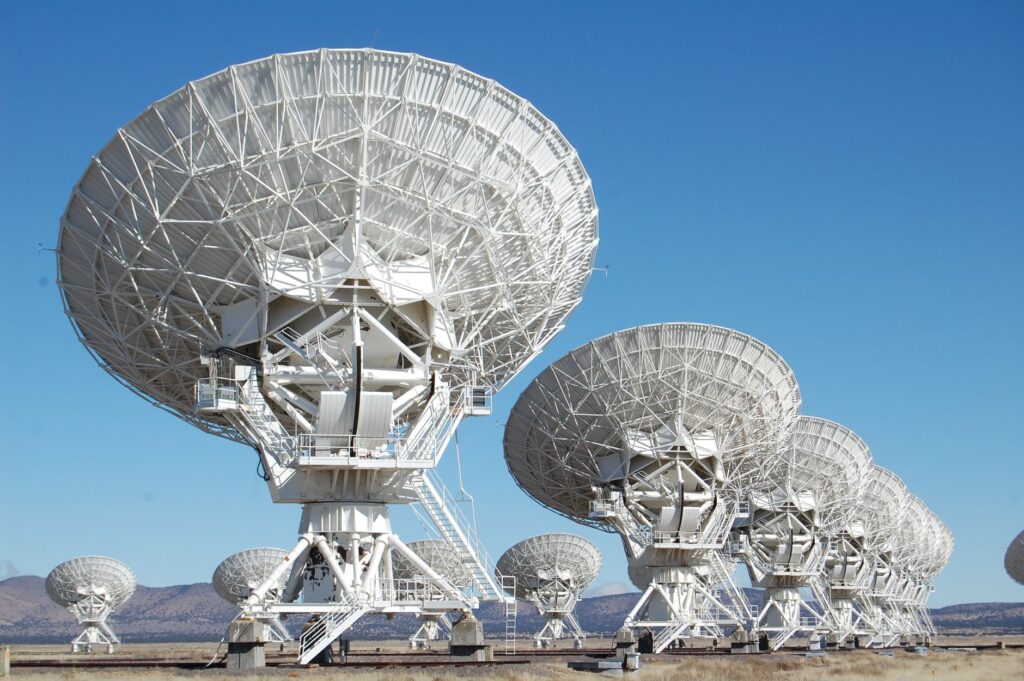
China FAST telescope is making significant advances in mapping neutral hydrogen, the essential cosmic gas for star formation. This groundbreaking research opens new avenues in astrophysics.
Introduction to the FAST Telescope
The China FAST telescope, or Five-hundred-meter Aperture Spherical Telescope, is a groundbreaking instrument in the field of astronomy. Located in the Guizhou province of China, it is the world’s largest and most sensitive radio telescope. This impressive facility has been heralded as the best proven tool for star mapping, particularly in its ability to detect neutral hydrogen, a critical component in understanding star formation.
Launched in 2016, the FAST telescope has a unique design that allows it to collect weak signals from distant cosmic sources. Its massive dish, measuring 500 meters in diameter, enables astronomers to study a wide array of astronomical phenomena. The telescope’s capabilities extend beyond mere observation; it provides invaluable data on the distribution of neutral hydrogen across the universe, revealing insights into the formation and evolution of galaxies.
The significance of the FAST telescope lies in its ability to map the cosmic gas essential for creating stars. By analyzing this gas, researchers can uncover the underlying processes that govern star formation and the dynamics of our universe. As scientists continue to utilize this remarkable tool, they expect to unlock numerous mysteries of the cosmos, enhancing our understanding of the origins and evolution of the universe.
Understanding Neutral Hydrogen
The study of neutral hydrogen is crucial for understanding the formation and evolution of galaxies. This element serves as a primary building block for stars, making it a key component in the universe’s structure. The China FAST telescope, or the Five-hundred-meter Aperture Spherical Telescope, has emerged as a groundbreaking tool in this field, providing unprecedented insights into the distribution and density of neutral hydrogen across vast cosmic distances.
Neutral hydrogen is often found in large clouds that can span hundreds of thousands of light-years. These clouds play a significant role in the star formation process, as they collapse under their own gravity to create new stars. The FAST telescope’s unique design allows it to detect faint signals from neutral hydrogen, enabling astronomers to map these clouds with remarkable precision.
Moreover, the ability of the FAST telescope to observe multiple wavelengths expands our understanding of the gas’s behavior in different environments. With its large collecting area and high sensitivity, it can reveal details about the temperature, density, and motion of neutral hydrogen, shedding light on the complex dynamics of galaxy formation.
This advanced capability positions the China FAST telescope as the best proven tool for star mapping, allowing scientists to unravel the mysteries of the universe and explore the processes that lead to the birth of stars and galaxies.
The Role of Cosmic Gas in Star Formation
The study of cosmic gas plays a crucial role in understanding star formation, particularly the role of neutral hydrogen. This gas is the primary building block for new stars and is abundant in the universe. The China FAST telescope has proven to be an invaluable tool in mapping this essential component of the cosmos.
Neutral hydrogen is found in vast clouds throughout galaxies, serving as the raw material from which stars are born. As these clouds collapse under their own gravity, they give rise to dense regions where new stars can form. The ability to accurately map the distribution and density of neutral hydrogen allows astronomers to gain insights into the processes that govern star formation.
With its unparalleled sensitivity, the FAST telescope can detect faint emissions from neutral hydrogen over large areas of the sky. This capability enables researchers to:
- Identify regions with high concentrations of gas, indicating potential star formation sites.
- Study the dynamics of gas clouds, providing information about their motion and interactions.
- Analyze the chemical composition of cosmic gas, which can reveal the conditions under which stars form.
Ultimately, the data gathered by the China FAST telescope contributes significantly to our understanding of the life cycle of stars and the evolution of galaxies.
Recent Discoveries by Chinese Astronomers
Recent discoveries by Chinese astronomers using the China FAST telescope have significantly advanced our understanding of the universe. This groundbreaking instrument, known for its unparalleled sensitivity and precision, has enabled researchers to map vast regions of neutral hydrogen, the essential component for star formation.
One of the most notable findings involves the detection of a previously uncharted region of neutral hydrogen in a distant galaxy. This discovery not only sheds light on the galaxy’s structure but also provides insights into the processes that govern star formation. The ability of the FAST telescope to capture fine details in the cosmic gas has made it an invaluable tool for astronomers.
In addition to mapping hydrogen, the FAST telescope has contributed to the identification of several new pulsars, which are highly magnetized, rotating neutron stars. These pulsars can emit beams of electromagnetic radiation, and studying them offers critical information about the lifecycle of stars and the behavior of matter under extreme conditions.
Furthermore, the telescope’s observations have helped clarify the distribution of dark matter in our universe. By analyzing the hydrogen gas clouds, astronomers can infer the gravitational effects of dark matter, which remains one of the most enigmatic components of the cosmos.
Overall, the ongoing research facilitated by the China FAST telescope continues to deepen our understanding of the universe and its fundamental building blocks.
Implications for Future Research
The implications of the China FAST telescope’s findings extend far beyond the immediate discoveries made by astronomers. Its ability to map neutral hydrogen with unprecedented precision opens new avenues for understanding the fundamental processes of star formation and the evolution of galaxies.
By providing detailed maps of cosmic gas, the FAST telescope allows researchers to:
- Investigate Galaxy Formation: Insights gained from neutral hydrogen mapping can help scientists unravel the mysteries of how galaxies formed and evolved over billions of years.
- Enhance Star Formation Models: The data can refine existing models of star formation, enabling predictions about where new stars are likely to emerge in our universe.
- Explore Cosmic Structures: Understanding the distribution of neutral hydrogen helps researchers evaluate large-scale structures and dynamics of the universe.
- Improve Cosmic Evolution Theories: The FAST telescope’s findings may lead to new theories regarding the lifecycle of stars and the interplay between dark matter and regular matter.
As the China FAST telescope continues to operate, its contributions to astrophysics are likely to be profound. Researchers anticipate that the telescope will provide data that could challenge existing theories and inspire new hypotheses, marking a significant leap forward in our understanding of the universe.
The China FAST telescope has revolutionized the way astronomers conduct star mapping, providing unprecedented clarity and detail. With its advanced technology, the China FAST telescope continues to be the best proven tool for star mapping in the world today.
Photo by braincontour on Pexels


More Stories